Author: Rowan Walch

  • Media Landscape in France and the USA: A Comparative Analysis

    France has been the near the center of media drama for a long time, and they are back in the fray more than ever. Whether it is their controversial immigration policies, presidential drama, or their everlasting influence on what is hip, France finds a way to relevance. Their current private and public media landscape mirrors the USA. They are not as free as they think, their government is a mess, and their politicians treat the positions they have been elected to like a game. Am I talking about France or the United States in that sentence? Both?

    France can no longer fund its private media, so how are they staying afloat? Mountains of grants is how, grants from those with opinions. In France, State owned media has been at the forefront quite a long time, with privately owned media being a close second. In the shadows, their media and politics have been increasingly affected by shareholders and privatization. France’s response to a 3% from 89% to 86% decrease in viewership of their country wide broadcast TF1 (Televison France), was to release a 24 breaking news network (Franceinfo) and a 24 hour news radio (radio france) under the French State owned media blanket. This is what has lead private French news sources to expand vastly. Monte Carlo Doualiya broadcasts across the entire Middle East. They have worldwide broadcasts that reach all French speaking countries. From my POV, France has something to gain, and they want as many people to see it as possible. In recent years though, the measures taken by the body entrusted with keeping the French press vivid, vibrant, and pluralistic have failed. It is said that without the mounting subsidiary grants, many of France’s private news publications would fail. Due to this, many of these publications have loosened their grip on the truth to stay in business, and French media is no longer as trustworthy as it used to be. This trend began shortly after WW2, and they have been rightfully criticized ever since. French News has a propensity to make news out of itself, hence the Charlie shooting. This is what lead France to being ranked 39th in Press Freedom, and 51st in overall freedom. The common take is that French media is barely actually in the hands of the people as they think it is. It is an illusion of freedom.

    The United States not to dissimilarly is dealing with an age of instability and untruths in the media. One of the core differences is that US media is not state owned, it is privately owned. Also, the majority of American citizens are not under the illusion that American media has their best interests in mind, but some still believe it like gospel. Unfortunately, lots of American media is known to sell to the highest bidder, and does not have Americans best interest in mind. But instead of criticizing Fox, Google, or Facebook, lets take a quick look at what exactly the US media did to get to this point. The United States media has been at points the driving force behind the American economy. Back in the days of the penny press, print news actually was the most manufactured product in the United States. Since the beginning, entertainment and news media have been money making machines in the United States. Circulation of the news was also a massive effort back then, which has continued through today. The United States national media has relentless circulation. I read through around so many countries profiles on the Media Landscape website, and a couple commonalities between the ones with the best press freedom, was that they had low circulation and plenty of local options. Compare that to the countries that treat News Media like a cash cow, and cash becomes the obvious variable as to why countries like that struggle. In France and the USA, if the ratings are not good enough, the news is not interesting enough. And so we make our own news.

    And so the truth is lost not only from the bottom line, but political propaganda, and broken infrastructure. This is what has lead to the USA being ranked below 70th in press freedom, 117th in overall freedom, and overall no longer a happy country. The truth is not even out there anymore, even for those with a talent for finding truth. Investigative reporting is done by corporations, and political reporting is paid for by people with a stake in the game. And for France, they are even lower, sitting at 89th out of 100 free countries in the world. Their media is more corporately funded than ever, they are actively silencing former colonies like Algeria, and the collective are blissfully unaware. I can only imagine what would happen in the United States if TV news broadcasts were federally run.
  • Advertising, Then vs Now

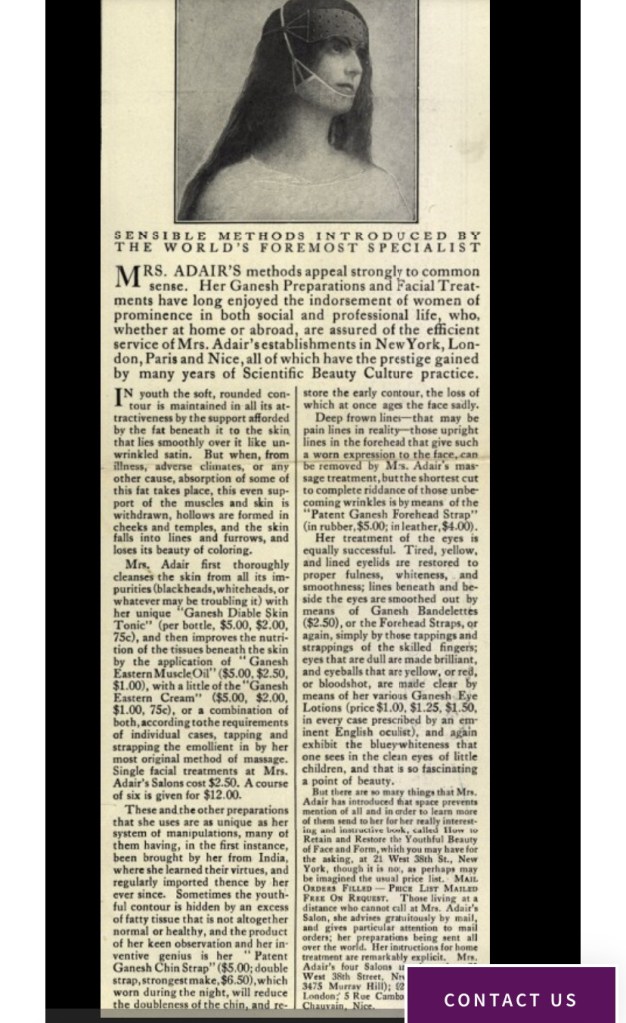
    Eleanor Adair, (Agnes) was one of the most influential beauty experts in the early 1900s. She had stores in Paris, London, and New York City. Her unique methods were derived from time in India, fashion school, and having a husband in the Royal Army Medical Corp. She sold her products on every corner of the Earth through mail order reaching as far as Rio de Janeiro, Algeria, and Zagreb. She was widely thought of as one of the earliest science based beauty experts, although now we’d probably see her methods as outdated. Possibly even pseudoscience, although she seemed like an honest person.

    The ad is funny to me. Along with many other ads from this time period, it gets away with several half truths. The lack of transparency regarding what her methods actually accomplish allowed her to advertise more aggressively. Throughout the ad you can see where they’re trying to cement their integrity. “Sensible methods,” “common sense,” “indorsed by the masses,” are all examples of the buzz words they’re using. This is an example of “bandwagon appeal” and also “rational appeal.” She wants her product to seem popular and necessary to maintaining timely beauty standards. And according to what I’ve read, using the word indorsed in her ads instead of endorsed actually absolves Adair of liability. Indorsed is use more in legal contexts and it’s thought of a less strong word. Things like this matter because Adair goes as far as to claim that her products do things like “restoring youth.” Furthermore, what I mean by aggressively is that she advertised her products as fool proof. “If you have ugly or wrinkly skin, apply X on Y and you’ll have beautiful, full skin.” So she actively highlights insecurities people may have, and explains how her products will undoubtedly fix those insecurities. This is also known as “Less than perfect appeal,” according to the “What are Advertising Appeals” article. This is the targeted approach from Adair to make the reader feel like they need her products. One of the more modern parts of her ads are the inclusion of package based fees. Much like streaming packages today, she offered salon packages that would pay for six visits, at a slightly cheaper rate than one time visitors. Also there’s lots of ads for professional women, something the USA was opposed to at the time. Adair was a progressive, and later influenced her peers similarly.

    Eleanor had a tumultuous few years in the early 1900s, full of setbacks. Like usual though, she turned her setbacks into strengths. Her first large setback was falling ill while on vacation to India with her new husband. She ended up not going with her group to see the Vale of Kashmir, but she found something better. Over the course of several days she learned many beauty secrets from the locals, and she would later come back with that exclusive knowledge. She claimed she invented Ganesh treatments, which no one could challenge. Electrolysis, weight reduction, facials, eye treatments, and massages were the main functions of her stores. She used Ganesh Muse Oil, Ganesh skin food, and Ganesh diable skin tonic. Her products sold between anywhere from 2$ for oils and topicals, to 5$ for her electrical forehead strap. She is hailed as a fashion icon, using her creativity and acquired knowledge to propel fashion to new heights. Her greatest achievement was not hers though, as she was the teacher of Elizabeth Arden, whose products are selling to this day.

    The Canadian protégé of Adair was Elizabeth Arden, who was living in New York City when the dynamic duo linked for the first time. After dropping out of nursing school, she was sent away for failing expectations. She joined her brother in New York City where she acquired knowledge as a bookkeeper for the E.R. Squibb pharmaceutical company about beauty products. She soon started working under Eleanor Adair as a treatment girl, once again being an observant learner. Adair saw potential in her, and let her go work in Paris to gain experience in the fashion industry. When Arden returned, she quickly failed as a business owner in 1910, but tried again in 1912. And the rest is history.

    (Elizabeth Arden collection)

    This ad spoke to me because it is in Spanish, which is not a language Arden spoke. She spoke French and English. But this makeup set is in Spanish because her products have sold everywhere. Approximately 150 countries are still selling her products to this day. Also the ad is much more subtle, with less words and more proof of efficacy. The visual imagery in this newer ad makes it obvious you’re buying makeup, not war bonds. To this day, Arden’s influence in the makeup industry is unmatched, and has unrivaled longevity. She combined the practical science she learned from her first few jobs with the exclusive knowledge Adair passed to her to become a fashion tycoon. In 1962 due to her pioneering work in beauty, she received the Légion D’Honneur, the highest honor available from the French government.

    Arden pulled from every facet of her career to become the fashion tycoon of the 1900s. She was a journalist, suffrage activist, fashion designer, and a scientist. Elizabeth Arden and Eleanor Adair used their extensive life experiences to propel each other into the strongest fashionistas of the 1900s. They did so through their ability to understand people, sell to them, but also deliver. According to the Nieman Reports article “Journalism Needs Leaders Who Know How to Run a Business”, the five reasons a journalists needs to know how to run a business are as follows.

    1. We need leaders who think like product managers
    2. We need leaders who can strategize
    3. We need leaders who are excited about entrepreneurship
    4. We need business leaders who can evangelize our mission
    5. We need leaders who consider themselves stewards

    These women had all five of these qualities. And the world is still a better place for it.

  • Visual Imagery in Gaza

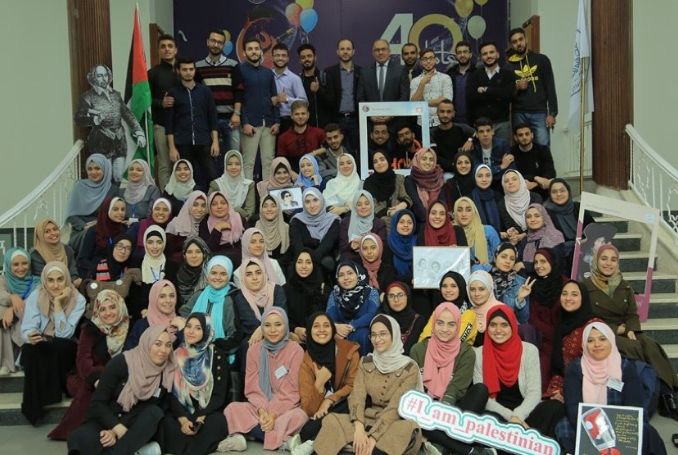
    This picture was taken by the Palestinian Chronicle. Five years after the 2014 bombings of Gaza, Islamic University of Gaza had been rebuilt to a useable standard. This is a Grand Poetry and Portrait exhibition. Gaza doesn’t have manufacturing, minerals, or other technological avenues to make money. They rely on education, art, and community to prop each other up, and flourish. The event was directed by professor Mosheer Amer, an English professor. This was a monumental meeting following the rebuilding of their library and English department. In his words, “That is true, but to me, IUG’s only danger to the Israeli occupation and its apartheid regime is that it is the most important place in Gaza to develop students’ minds as indestructible weapons. Knowledge is Israel’s worst enemy.” I can’t say it any better than he can, the enemy of Israel is knowledge, and decency. He no longer works here or makes a difference, as following the unjustified 2014 bombings, Israel made sure they finished their work in 2024.

    Picture credits go to NBC News and Palestinian Chronicle. The first photograph is the IUG, in 2014. The second photograph was taken on October 11th, 2023, four days after the Hamas attack on Israel. No matter how hard I look, or you look, there isn’t much building left that would lead us to believe this was a revered University. What lies broken and bombed on your screen, is Gaza’s oldest and most influential university. The Islamic University of Gaza and was obliterated behind Israeli belief that it was a Hamas stronghold. According to the NBC News article Class Destroyed, the IDF (Israeli Defense Force) apologized shortly after for misguided intel. Three other schools were damaged by explosives, while Israa University, the newest school in Gaza, was leveled behind the same faulty “intel.” Plenty of American publications ran with Israeli propaganda that the schools are Hamas strongholds. Either way, Israel knows that Hamas doesn’t represent the wellbeing of Palestinian citizens, but they’re destroying their society. Gaza prides itself on education and human capital, and Israel knows that.
    Here is Israa University, video shared generously by the Israeli Defense Force.

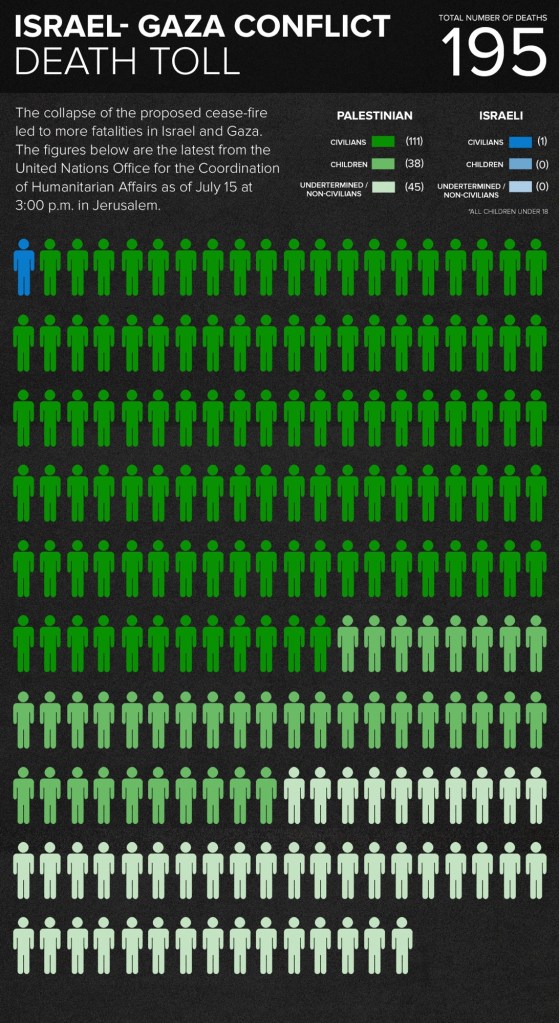
    An estimated 80000 Gaza residents have been killed in the Israel-Gaza conflict dating from October 2023-present day. Only over 1200 Israeli citizens have died conversely. Here in the USA, there is plenty of people that believe Israel is acting altruistically.

    Photo creds to ABC. Israel has used propaganda in visual imagery following October 7th like you wouldn’t believe. Pictures of Israeli children dead flooded the internet for months following the Hamas attacks. Israel wants the world to believe they’re the oppressed and marginalized. They’re powerful, rich, and have wide spread influence. For every one Israeli child that has died as a result of the conflict, 38 Palestinian children are killed. Israel is taking away the future, past, and present of Palestine in front of the world’s eyes, and some still cannot wrap their heads around it. This is genocide, and Israel used visual imagery of missiles, attacks, injuries, and deaths to set the table. Over 180 media and journalism professionals have been killed while reporting on the conflict by Israel as well. Israel works tirelessly to flood the internet with anti-Palestinian rhetoric, despite the facts clearly painting them as the aggressor. Our empathy and compassion is used against us, and made considerably more effective by visuals.

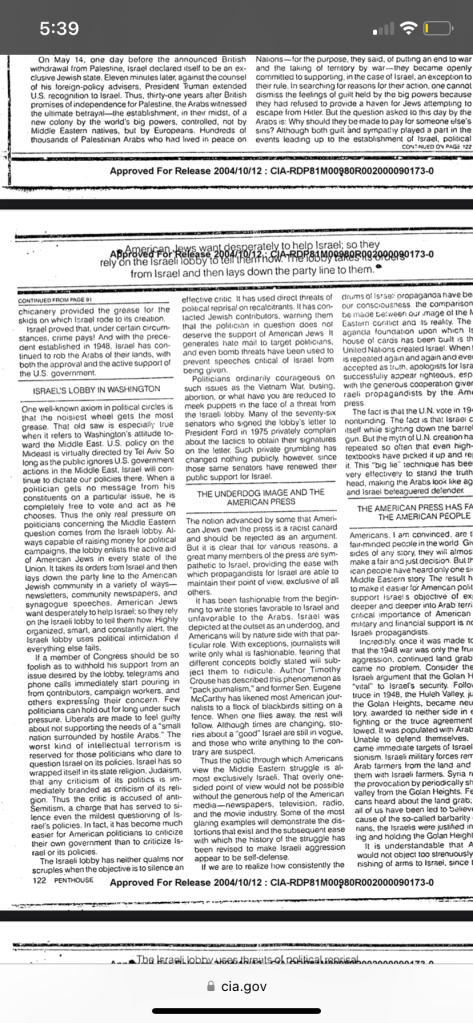
    The CIA released a foreshadowing document detailing exactly how Israel uses threats, but also visual imagery to trick people all around the world. Music, movies, TV, newspapers, and anything we consumed regarding the Middle East is through an Israeli lens. Our every day media has been so influenced by Israelis that American Media painted them as underdogs for decades. We all believed Israel was oppressed and needed help, despite them being beleaguered aggressors. 750,000 Native Palestinians were pushed out of their homeland in 1948, by the Jews, Americans, and British. But through the use of visual imagery going as far as Textbooks perpetuating the “Big Lie,” Israel has cemented itself. The media has shown us the side of the Middle East the way Israel wants us to see them, it’s a tragedy. For an article comprised in 2004, it’s sad to see how effective a lot of the same methods still are.

    Photo credits to Smex.org

    This is a funny, fascinating, and harrowing picture all at the same time. Military ads on a dating app, funny. The lengths the USA and Israel are willing to go to kill of Palestine, fascinating. And Whats harrowing is the fact that young men who are easily manipulated and already vulnerable on tinder, are tricked no matter where they go. They won’t let you breath, they don’t want to.

  • The Modern Music Industry

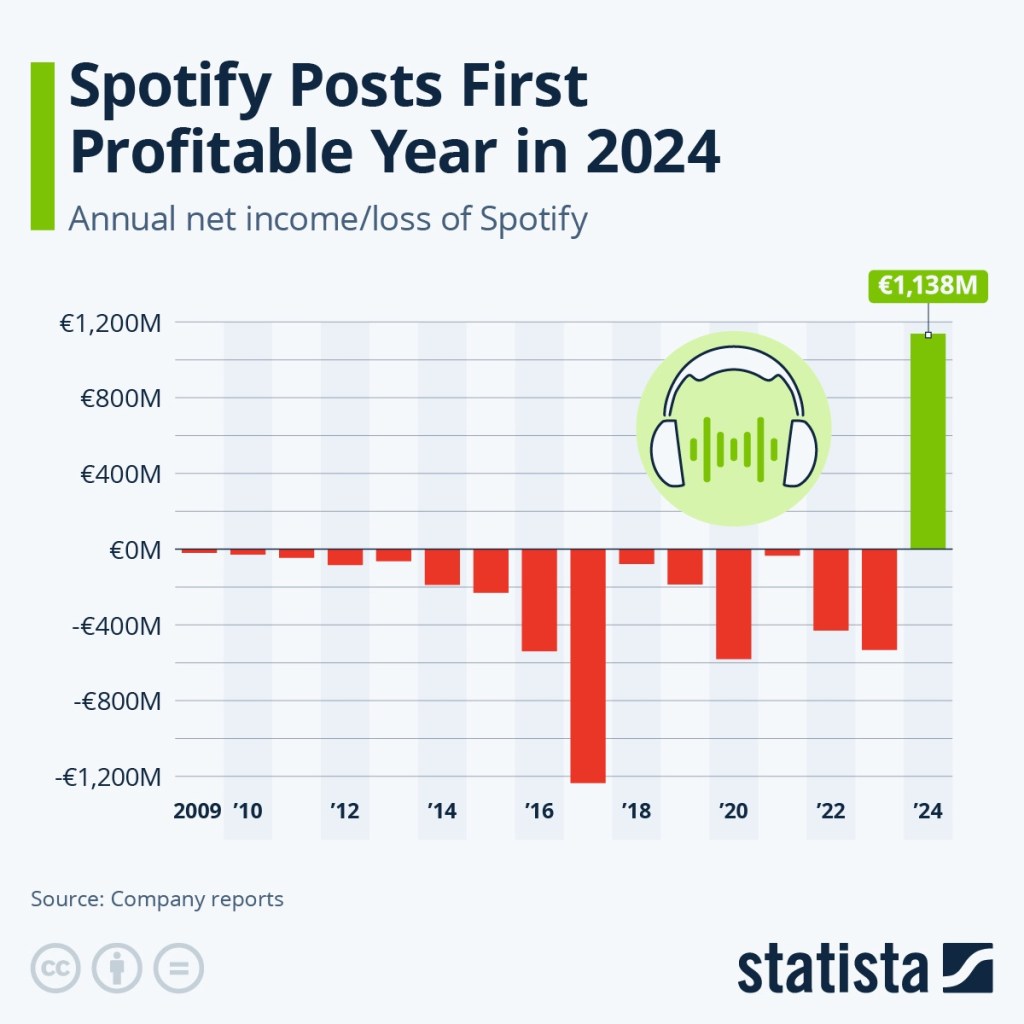
    With SoundCloud, Apple Music, YouTube Music, and Spotify there’s more ways for an artist to reach an audience than ever. We as listeners have access to unimaginably large musical libraries. The cost of that infinite variety is intentional listening. Artists aren’t as directly supported by album sales now, and they only get paid a fraction of the streaming revenue.

    Headphones have changed society and our interactions with it tremendously

    With that being said, music has benefited expeditiously from the instant access available to us at anywhere, anytime. Music became available so readily through the introduction of music streaming. There’s more musicians out getting popular and changing music forever than before. We can listen in public, in the car, and even in a plane. Spotify, the world’s largest music streaming platform currently, was invented in 2006 by two Swedish men, and is only recently the standard for music streaming. The current subscription model is free with ads, 10.99 for Spotify premium, and student discounts up to 50% off. What makes the streaming age unique is the freedom of customization and promotion. For the hundreds of millions of unique monthly listeners, there’s thousands of playlists tied to keywords such as gym, party, or relaxed. You can find any music, for any vibe.

    A draw back of Apple Music for me is its inability to travel across platforms, a problem Spotify doesn’t have. It doesn’t work on my Xbox or laptop. But I love that Dolby Amos what can I say.

    My favorite music tends to be RnB or Rock, and these are my three favorite songs right now.

    Out of Time by The Weeknd came out in 2023. The Weeknd is under Republic Records, who is owned by Universal Music Group. The Weeknd also runs a separate label called XO. He makes anywhere from .0004-.0005$ per stream according to his contract on Spotify. all of his songs release under the XO and Republic Records label.

    My second favorite song right now is an oldie, Dreams. The label and owner is Warner Bros. Stevie Nicks currently makes .001-.0015 a stream on Apple Music.

    No Idea by Don Tolliver released in 2019, under Cactus Jack, the label ran by controversial megastar Travis Scott. They’re one of few independent labels under UMG. He’s making .0005-.0007 on each stream according to YouTube Music.

    Despite the global reach of musicians now, they’re still finding ways to not be paid enough. The vast library of Music we have access to leads us away from intentionally supporting artists by steering us away from buying albums. Without that intentional support, the artist boom will not last forever as making a career out of it is hard. The top musicians make an absurd amount compared to even semi-famous musicians.

    https://insights.daffodilsw.com/blog/how-spotify-works-business-model-and-revenue-streams

    Click to access Global_Music_Report_2023_State_of_the_Industry.pdf

  • About the Author

    My name is Rowan Walch, I’m from Henderson, Nevada. I’ve been a lot of places in the world, and have seen beautiful nature, but I’ve never lived anywhere other than Henderson. I graduated from Bishop Gorman, and I’m going to college for media studies.

    From the time I was born, sports have been front and center in my life. I was an athlete, a knockoff statistician, and an armchair pundit from the beginning. Growing up Ive always thought sports would be the area I can monetize. But in general, Ive realized I’ll do anything in media, as long as I believe it’s worth talking about. My original dream was to be a beat reporter for a local sports team, but with a degree I could do PR, social media management, and day to day reporting. Right now I don’t have a clear path forward, but my degree is certainly tailored to the style of careers I want. Sports media has been my whole life, it can be even more.

    my friend has a dad that runs a professional athlete consultancy and growth company. They help athletes make good decisions with money, investments, and relationships. They also have a division tailored to actually helping athletes get better at their craft, but I’m more interested in the player image side. I know what I’m talking about; I’ve watched sports/media unfold for my entire life. Really though, I’m also interested deeply in social justice, and I’d take any position to help spread awareness about injustice.